
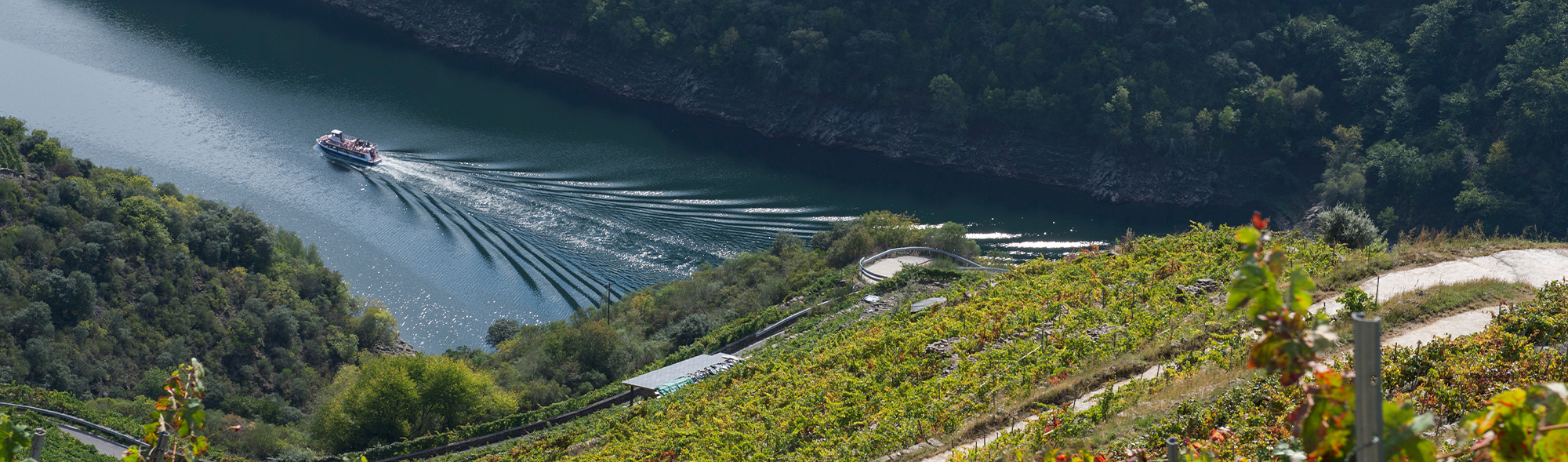
When most people picture wine country, they imagine flat valleys and endless rows of vines laid out in perfect order. Ribeira Sacra is nothing like that.
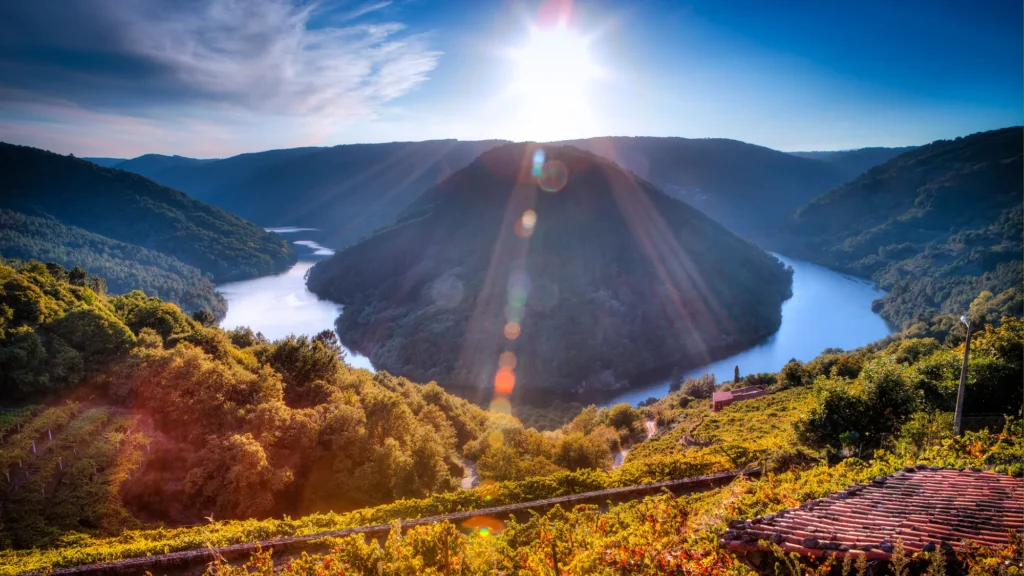
In this remote corner of Galicia, in northwest Spain, vineyards aren’t planted on rolling hills – they cling to canyon walls. Some are so steep that grape picking is officially classified as heroic viticulture. Grapes are carried by hand down terraces to small boats waiting on the river. The Sil and Miño rivers cut through granite mountains, creating canyons up to 700 meters deep. It’s breathtaking and quietly radical for anyone used to the polished version of wine travel.
November adds another layer. The harvest is winding down, the viewpoints are empty, and mist settles in the canyons. Chestnut festivals and village celebrations mark the end of the season. Tourism never gets overwhelming here, but late autumn is when the region feels particularly raw and atmospheric.
This is wine travel for people who like places that are harder to reach, that don’t always make things easy, and that haven’t been reshaped around mass tourism. Ribeira Sacra isn’t polished, and that’s exactly why it works.
Experiencing the Landscape
The scale of Ribeira Sacra is best understood from the river. Boat tours through the Sil and Miño canyons reveal just how improbable these vineyards are: narrow terraces stacked into cliffsides, reachable only on foot or by small rail systems that lower crates to the water.
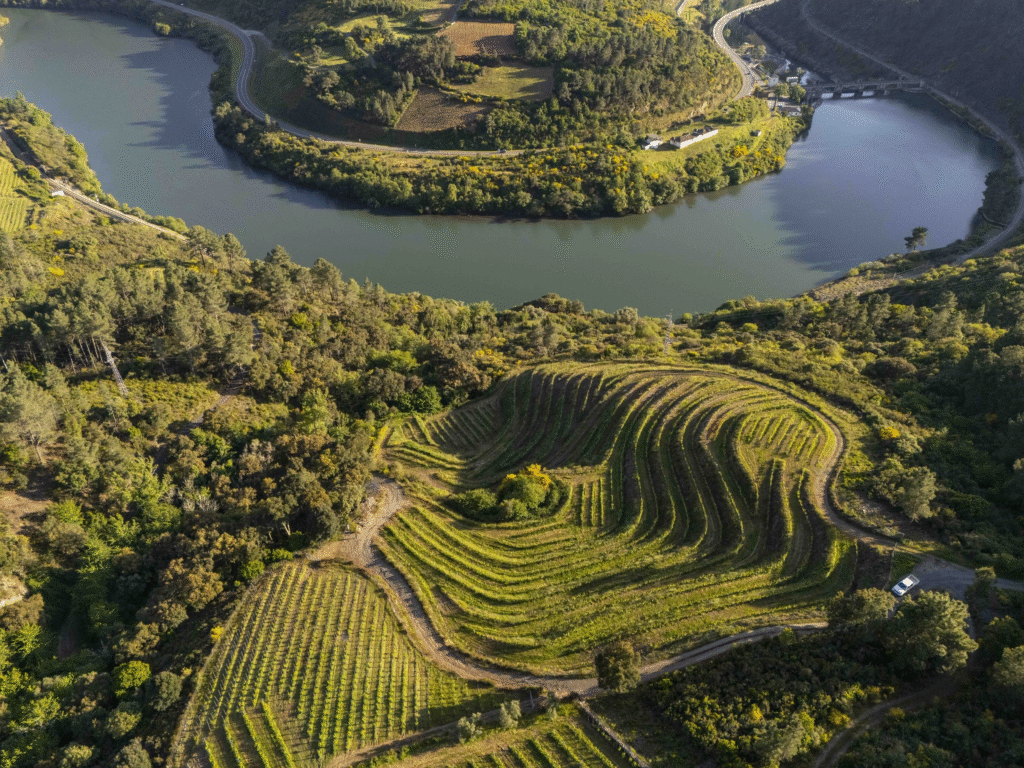
Some tours include winery visits and meals. Ecosacra operates a hybrid catamaran that transports both visitors and grapes to 300-year-old cellars carved into the rock. These north-facing spaces overlook the river and are used for aging wines in naturally cool conditions.
Production here is almost entirely small-scale. Winemaker Puri Díaz Ferreiro farms two half-hectare plots alone, making just 3,000 bottles per year in the medieval Adegas de Vilachá cellars. Others blend low-intervention winemaking with traditional techniques handed down through families.
The leading red grape is Mencía, known for its earthy, aromatic character, often blended with Brancellao, Sousón, or Caíño. Godello produces elegant whites. Quality has surged over the past decade, but Ribeira Sacra hasn’t tipped into mainstream wine tourism yet – part of its appeal.
Where to Stay
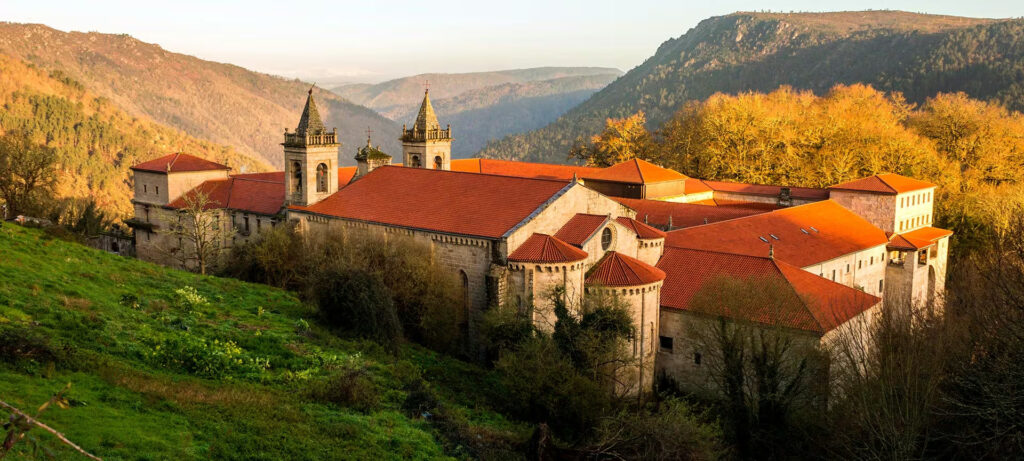
Accommodation here leans into history rather than gloss. The 10th-century Santo Estevo monastery, a former Benedictine complex, is now a Parador hotel with 77 rooms spread across Romanesque, Gothic, and Renaissance cloisters. Nine bishops took their final vows here, and their resting place remains in the chapel. Rooms vary in style, some with direct canyon views, and the restaurant occupies the old stables beneath vaulted ceilings.
A few kilometers away, Áurea Palacio de Sober stands on the ruins of a 7th-century palace, surrounded by 20,000 m² of gardens. Its spa faces the forested hills. Both properties offer a sense of place that comes from genuine history, not re-creation.
What to Do
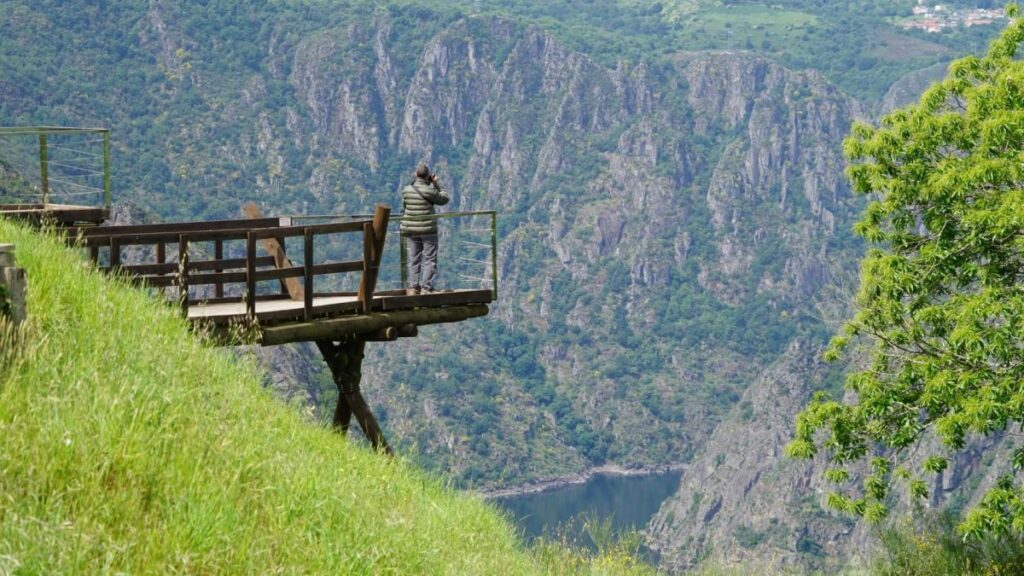
Miradoiros (viewpoints) like Balcones de Madrid and Cabezoás give sweeping views of the Sil Canyon from platforms that seem to hang over 700-meter drops. Getting to them involves narrow, winding roads through oak and chestnut forests.
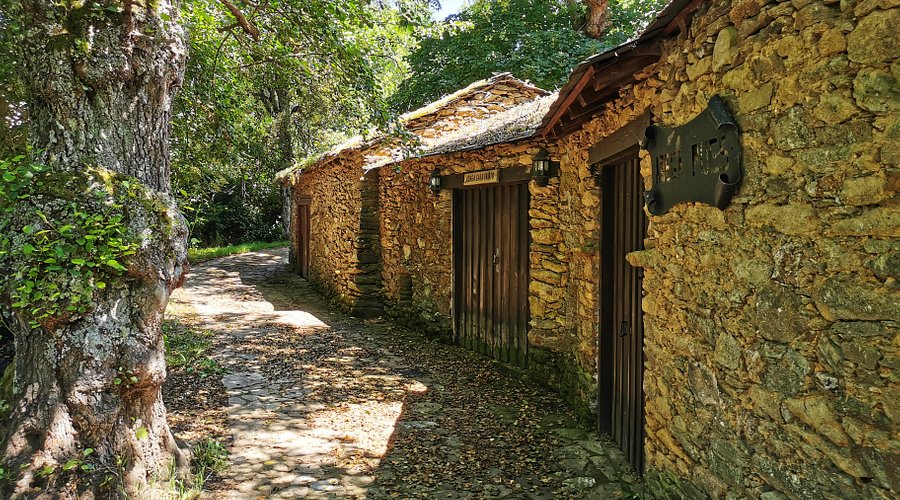
Winery visits typically require advance bookings. Adegas de Vilachá preserves a cluster of medieval stone cellars that once served as family winemaking spaces. Val do Frade and other small producers offer intimate tours that focus on craft rather than scale.
November also brings magostos, traditional chestnut roasts, along with local pilgrimages and village celebrations tied to the end of the harvest season. These are small, local events rather than festivals staged for visitors.
When to Go
Spring (April-May) and early autumn (September-October) bring mild weather and the energy of the harvest. But November is shoulder season: quieter, often misty, sometimes wet, but beautiful. This is when the canyons feel empty and moody, when hotel rates drop, and when you’re more likely to have a miradoiro to yourself. If you don’t need constant sun and are drawn to atmospheric travel, late autumn works especially well.
Getting There
The easiest access is through Santiago de Compostela Airport, followed by a RENFE train to Monforte de Lemos. In summer and during Holy Week, the tourism board runs free shuttles linking monasteries, wineries, and ferry points.
Driving offers more flexibility, though the steep, winding roads demand attention (and are part of why the region has stayed quiet). Ribeira Sacra received UNESCO Biosphere Reserve status in 2022 and is Spain’s 2024 World Heritage nomination, so visitor numbers will likely grow in the coming years. Booking winery visits and accommodations ahead is recommended.
Why it Works
Ribeira Sacra isn’t the easy, sunlit idea of wine country most people know. It’s steep, quiet, and beautifully unpolished. November only amplifies that: fewer people, slower travel, real atmosphere.
Get in touch to start planning your visit.