
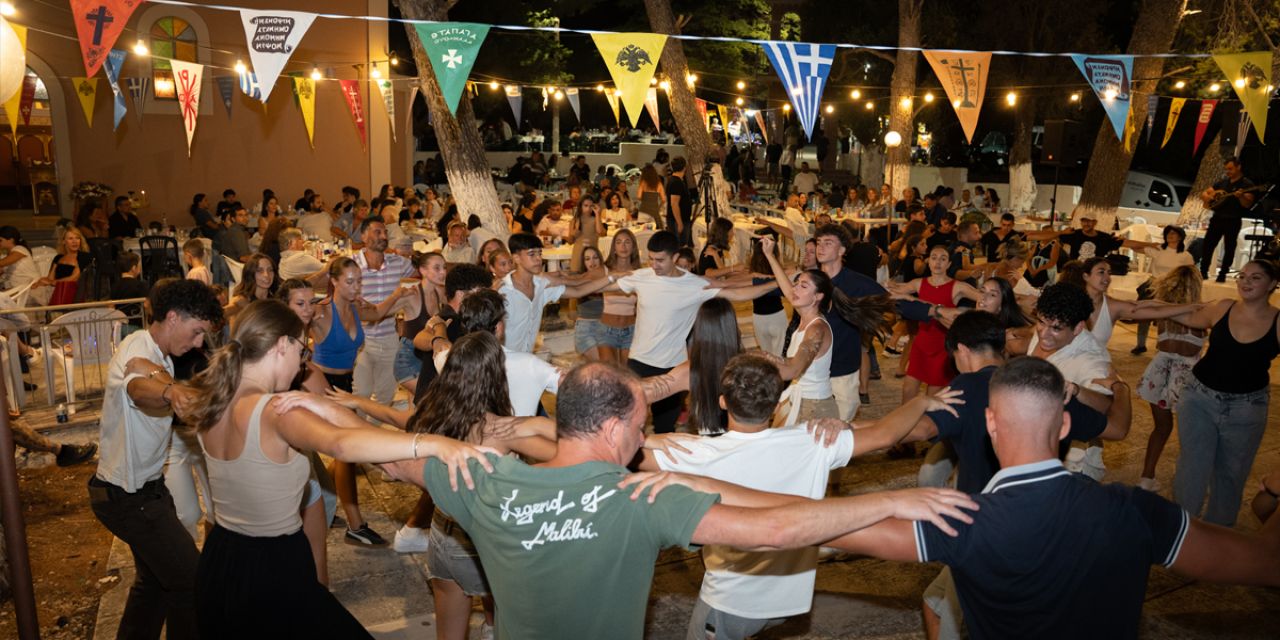
If you’ve spent any time in Greece around the 15th of August, you’ve probably come across a panigiri – whether you knew what you were looking at or not. Dekapentavgousto, the Assumption of the Virgin, is the country’s biggest religious holiday, and it’s when most visitors encounter their first one.
But panigiria aren’t confined to one day in August. Every Orthodox church is dedicated to a particular saint, and when that saint’s feast day comes around, the local community celebrates. The day begins with a church service before spilling into a feast that’s genuinely open to everyone. Long communal tables are laid out, huge pots of slow-cooked food appear, local wine is poured freely and, before long, musicians strike up the first tune. Families gather across generations, neighbors catch up after months apart, returning emigrants come home for the occasion, and visitors are welcomed just as warmly. Don’t be surprised if you find yourself sharing a table with complete strangers or being pulled into a circle dance before the night is over. It’s also why Greeks celebrate name days alongside birthdays – if you’re named after a saint, you’ll celebrate on that saint’s feast day too, a concept that tends to baffle anyone who didn’t grow up with it.
Because there are hundreds of saints and thousands of churches, there are panigiria taking place across Greece throughout the year. Summer simply happens to be when many of the biggest and most atmospheric take place, making it the perfect time to experience one.
If you’ve looked into panigiria before, chances are you’ve come across Ikaria. Images of enormous circles of people dancing arm in arm to the ikariotiko, on an island renowned for nights that only seem to get going after midnight, have become almost synonymous with the tradition. But they’re only one expression of it. Across Greece, from mountaintop monasteries and tiny island chapels to remote mainland villages, there are countless panigiria that are every bit as atmospheric but remain almost entirely local affairs.
Here are some of the best to plan a trip around.
1. Ioannis Prodromos – Tsepelovo, Zagori (24 June)
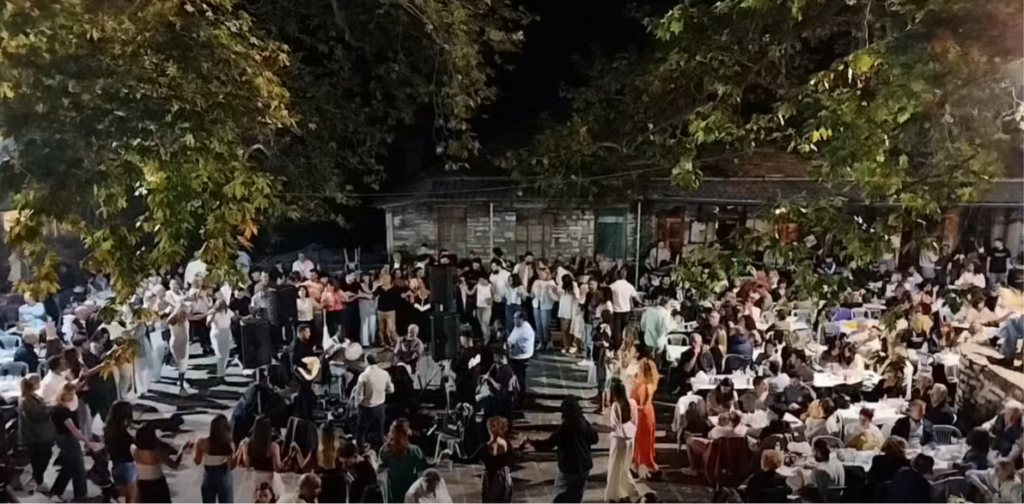
Zagori, in the mountains of Epirus, feels like a world away from the Greek islands. Deep gorges, dense forests and more than forty beautifully preserved stone villages define the landscape, while old arched bridges and cobbled paths hint at centuries of history. Above Tsepelovo, one of Zagori’s largest villages, sits the 18th-century Monastery of Rogovou, where the feast of St John the Baptist begins before the celebrations move into the village below. The music here is unmistakably Epirotic: clarinets and violins replacing the island fiddles and bouzoukia many visitors associate with Greece, while the food is richer and heartier, reflecting the cooler mountain climate. It’s a completely different atmosphere to a Cycladic panigiri, but every bit as memorable.
2. Ai Giannis Klidonas – Apeiranthos, Naxos (24 June)
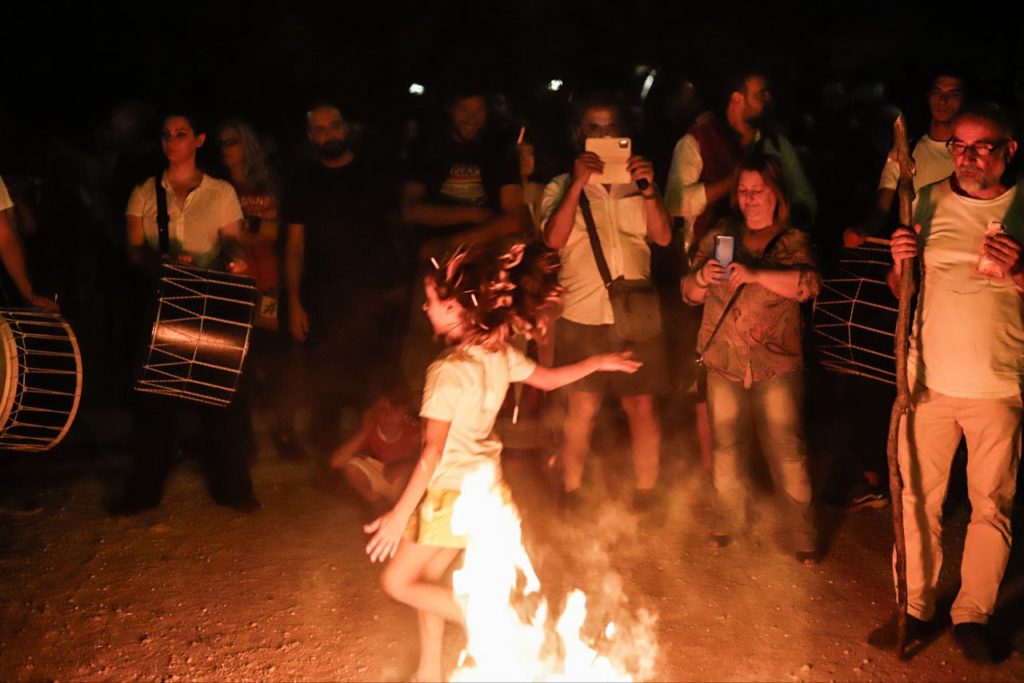
High in the mountains of Naxos, Apeiranthos is one of the Cyclades’ most distinctive villages, with marble-paved alleys, Venetian towers and a culture so fiercely independent that its dialect is said to preserve elements of ancient Greek. The feast of St John the Baptist coincides with Klidonas, one of Greece’s oldest surviving midsummer customs. Bonfires are lit throughout the village and people leap over the flames three times while chanting old rhymes, while the tradition of the “unspoken water” sees unmarried girls silently collect water overnight in the hope of revealing their future husband. Pagan midsummer rituals and Orthodox tradition exist comfortably side by side, making this one of Greece’s most unusual celebrations.
3. Profitis Ilias – Sifnos (19 July)
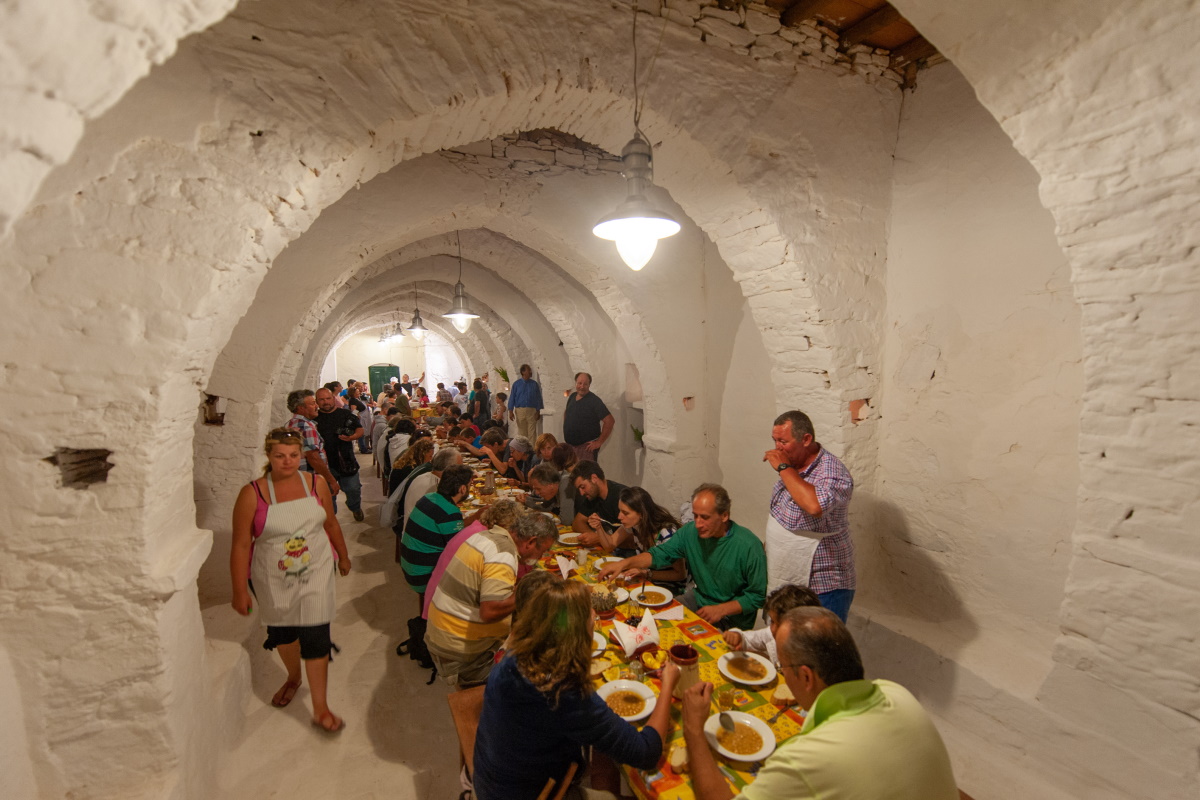
Crowning the highest point on Sifnos at 670 meters, the Monastery of Profitis Ilias has watched over the island since the 17th century, when it also served as a refuge from pirate raids. Its views stretch across much of the Cyclades, but the real surprise lies inside: an extraordinary vaulted stone dining hall that feels almost cave-like, centred around a long communal table. Around twenty volunteers, the panigyrades, spend days buying ingredients, hauling supplies up the mountain by mule, cooking and serving entirely at their own expense. Guests are welcomed sitting after sitting as the tables are reset throughout the evening, before the meal of Sifnian chickpea stew, slow-braised goat with pasta and kefalotyri ends with the entire room banging forks against their plates in honor of the volunteers who made it all possible.
4. Agia Paraskevi – Amorgos (25 – 26 July)
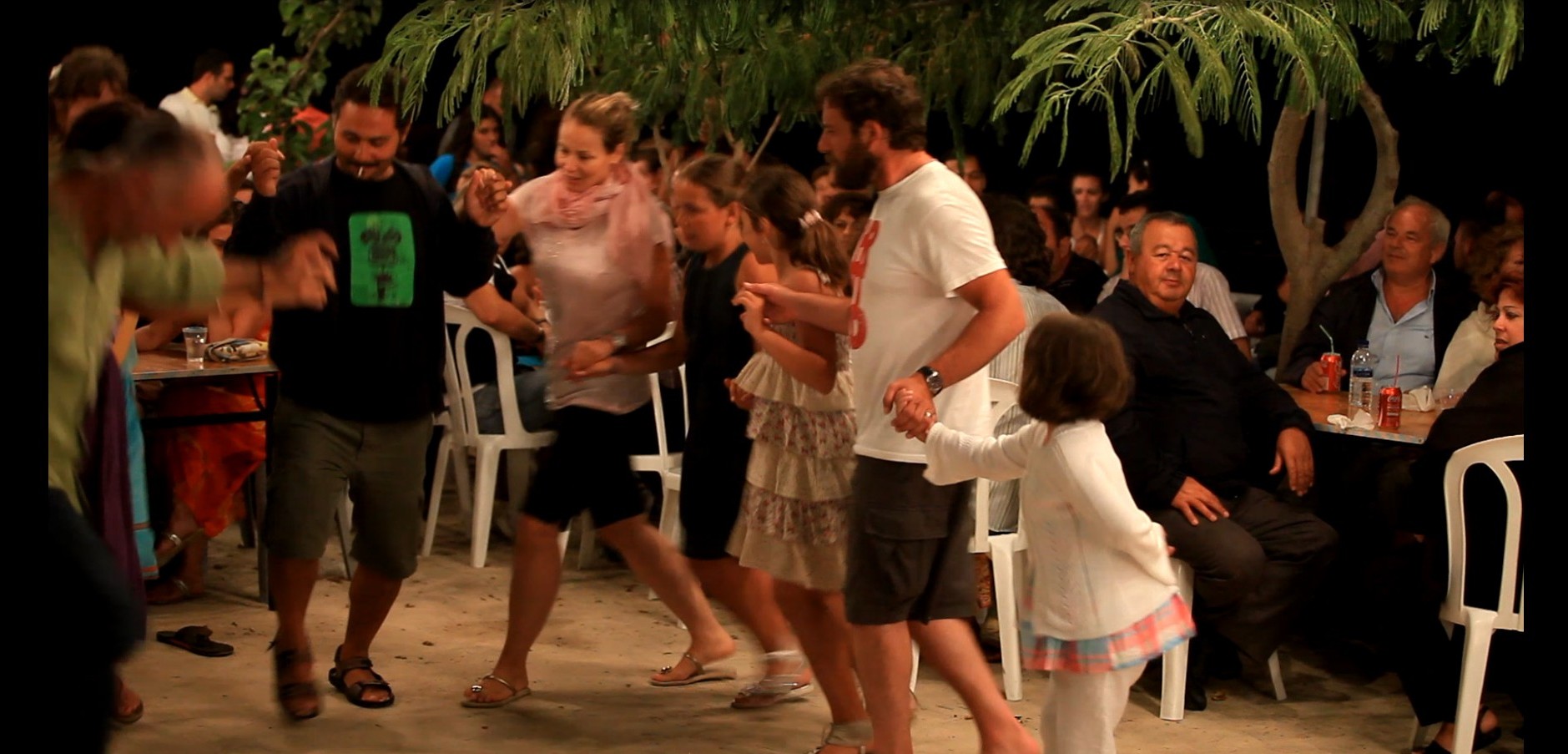
The feast of Agia Paraskevi is the largest panigiri in the Cyclades by attendance, drawing thousands of people to the southern part of Amorgos every summer. What makes it remarkable, though, is the scale of the preparation. A week beforehand, islanders begin donating wheat, cleaning sesame and anise, and baking around 800 loaves of traditional eftazymo bread in wood-fired ovens. Around three tonnes of meat simmer in huge cauldrons over open fires while some ninety volunteers work around the clock, entirely unpaid, to prepare a feast that embodies the island’s extraordinary tradition of hospitality.
5. Panagia – Kato Koufonisi (15 August)
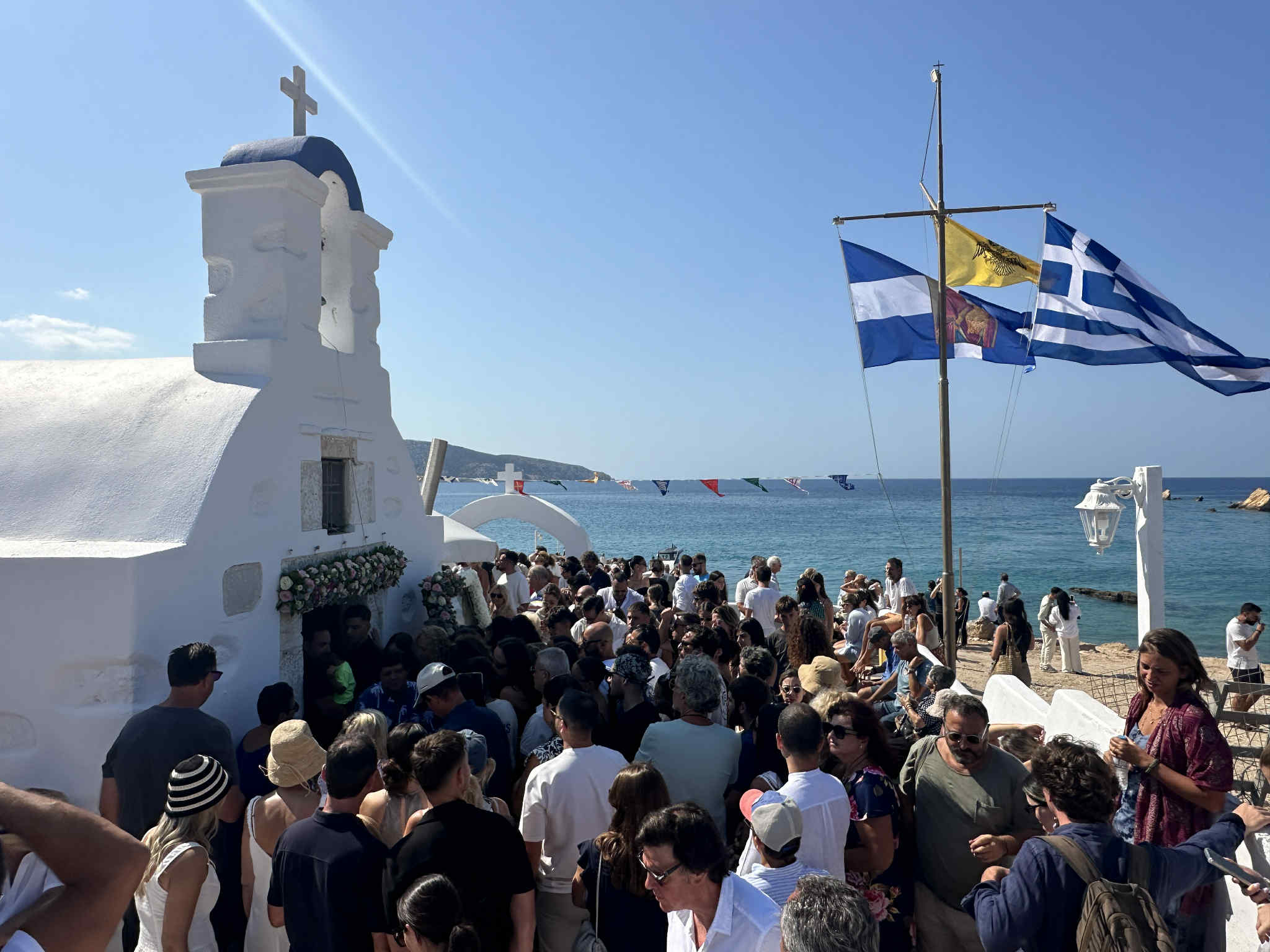
Kato Koufonisi has no permanent residents, no roads and only a handful of simple buildings scattered across an island of empty beaches and turquoise water. Yet every Dekapentavgousto, boats ferry hundreds of pilgrims and day-trippers across from Ano Koufonisi for the feast of the Virgin Mary at the island’s tiny whitewashed chapel. After the liturgy, everyone gathers together at the island’s only taverna before returning home, leaving Kato Koufonisi deserted once again. For a few hours each year, this tiny island briefly comes back to life.
6. Panagia – Alonissos (15 August)
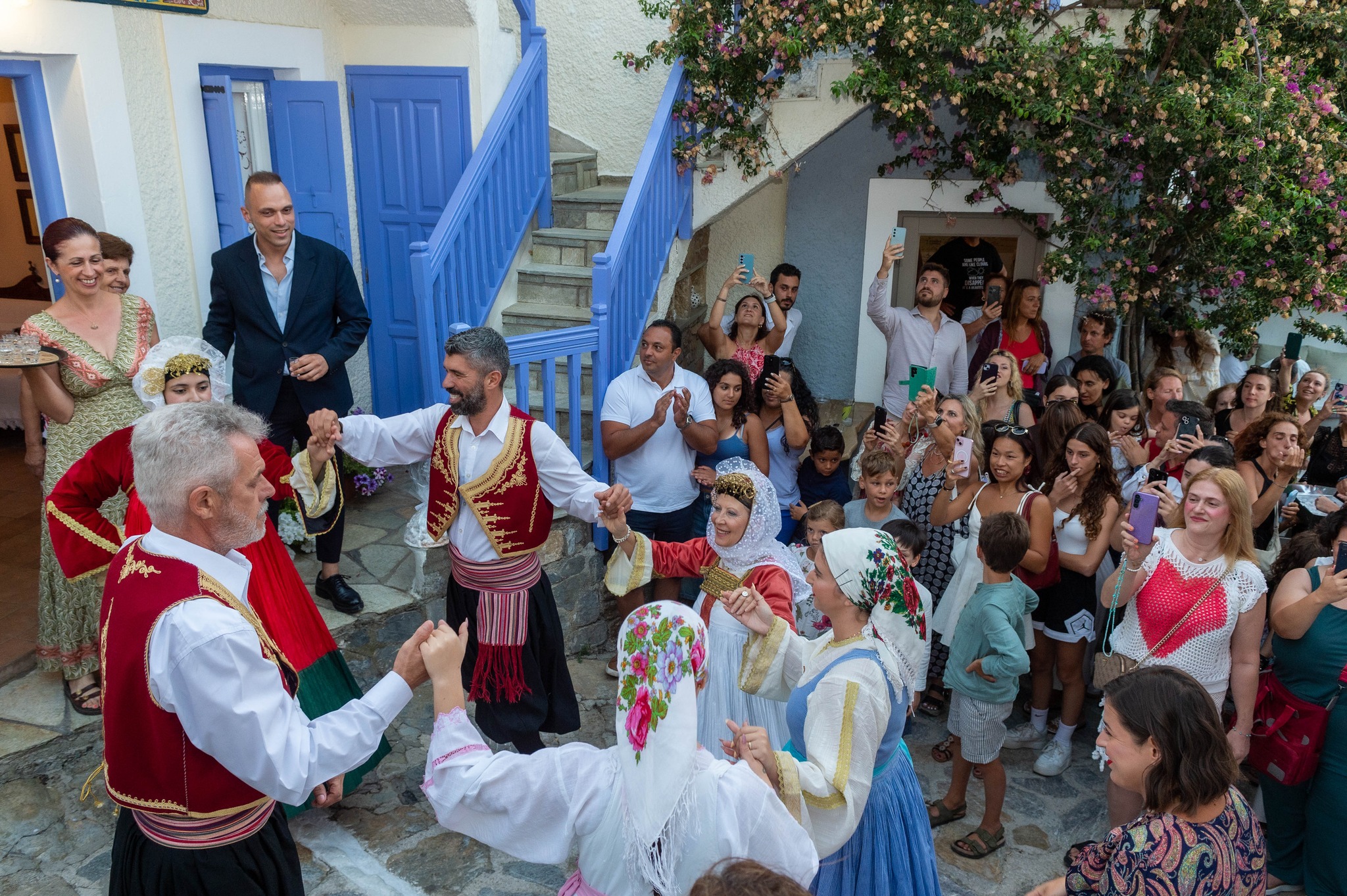
Like communities across Greece, Alonissos celebrates the Feast of the Assumption on 15 August, but nowhere else marks it quite like this. In Chora, the island’s beautifully restored Old Village perched high above the harbour, locals recreate a traditional Alonissian wedding as it would once have taken place. Musicians accompany the koumbaros to the groom’s house before making their way to the bride, whose family teasingly keeps the door shut until the groom promises a gift to his future mother-in-law. The bride wears the island’s traditional morka dress before the procession continues to the church, followed by a communal feast of braised goat with pasta and dancing that carries on long into the night. Rather than a performance for visitors, it’s a living tradition that has become an integral part of Alonissos’ Dekapentavgousto celebrations.
7. Xylopanagia – Serifos (16 August)
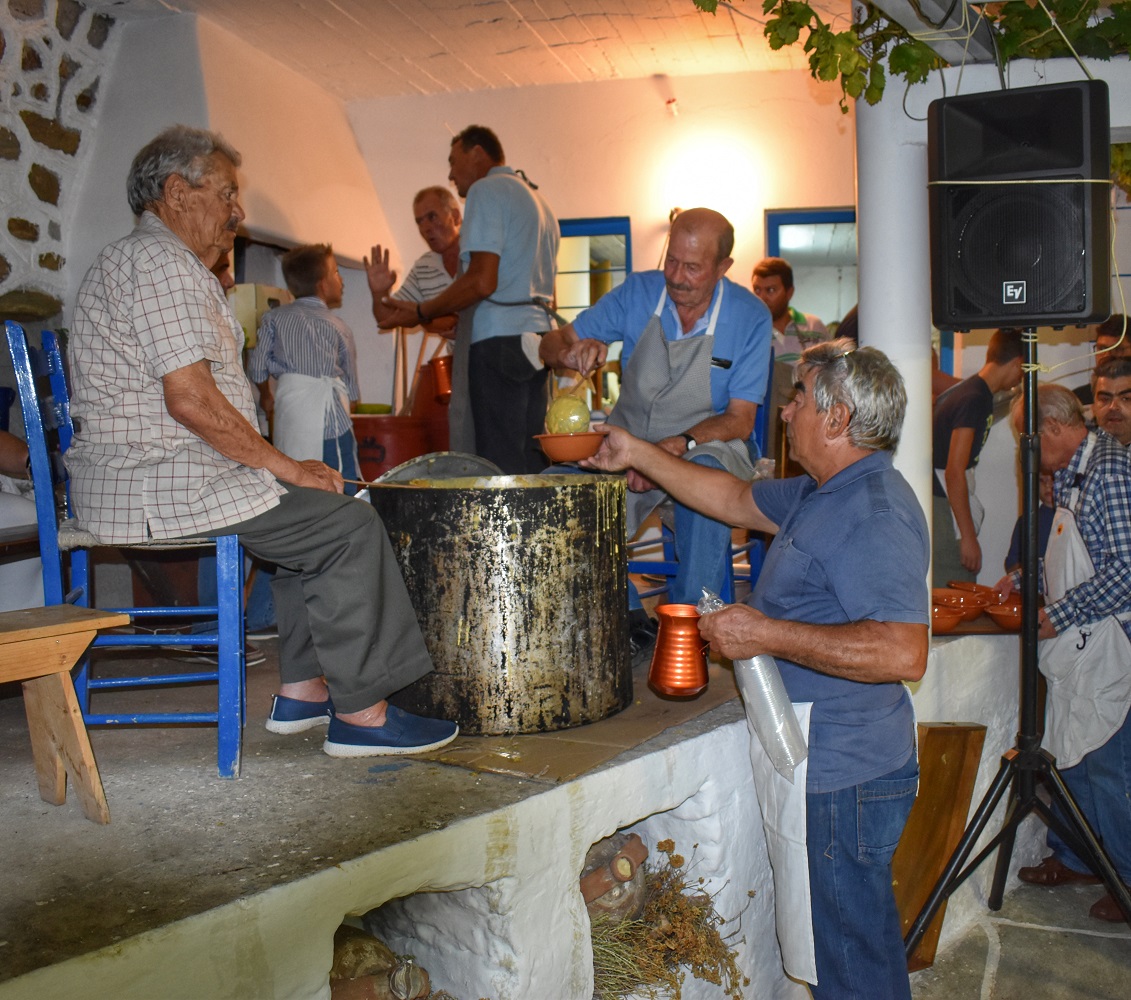
Held at the island’s oldest church in the hilltop village of Panagia, Xylopanagia is one of Serifos’ most important celebrations and continues over three days after the Feast of the Assumption. Its name comes from tsakomata, an old custom in which young men would duel with wooden sticks for the honor of leading the first dance with the village’s most beautiful woman beneath the ancient olive tree in the square. The stick fights have long since disappeared, but almost the entire island still gathers for one of the Cyclades’ liveliest panigiria, with music, dancing and feasting lasting well into the night.
8. Ioannis Prodromos – Siki, Pelion (28 – 29 August)
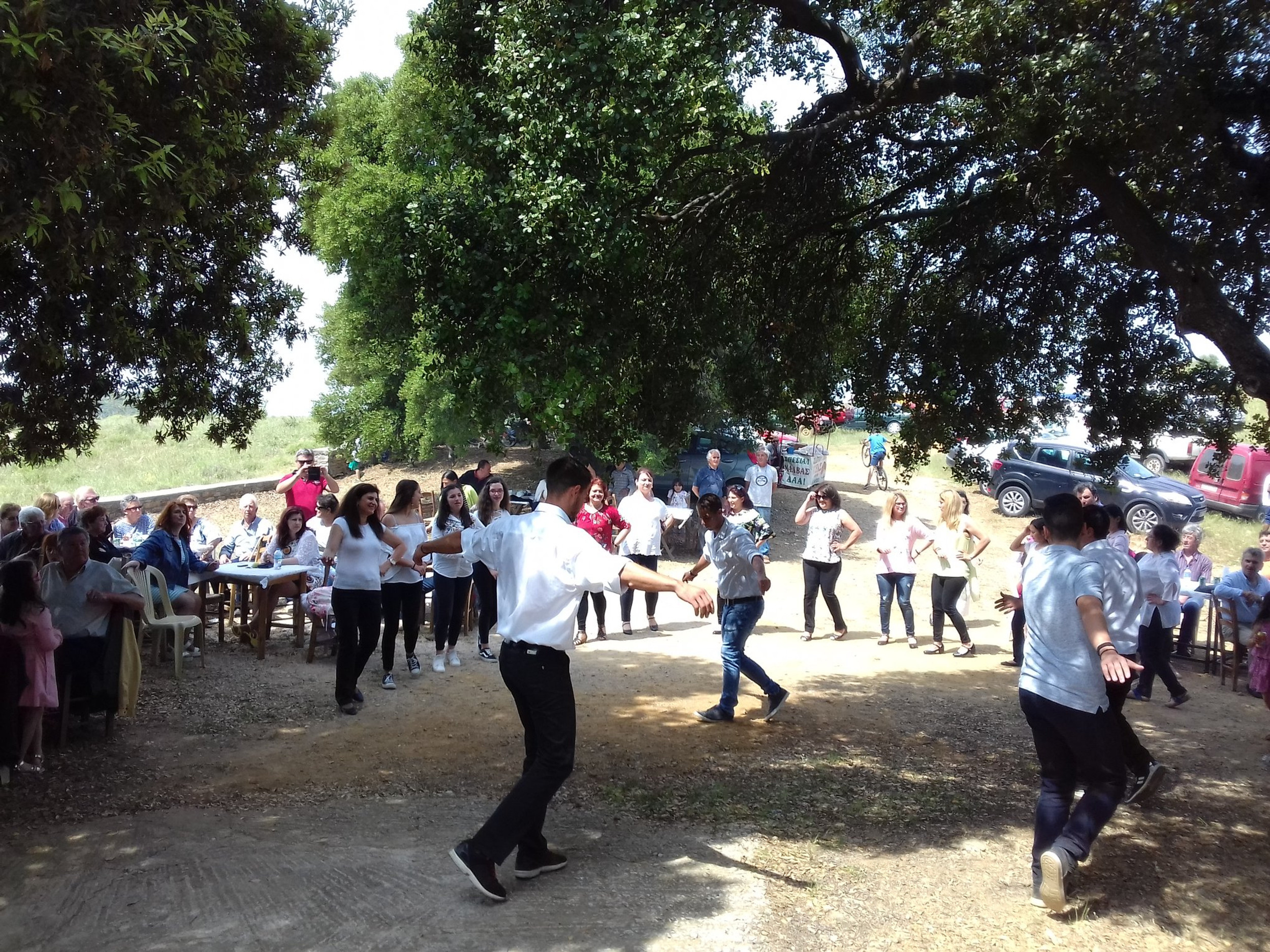
Pelion occupies a unique place in Greece, where forested mountains tumble almost directly into the Aegean and traditional stone villages are hidden among chestnut, beech and plane trees. The feast of St John the Baptist begins at the local monastery before the celebrations move into the village itself for music, dancing and a communal meal. Coming towards the end of summer, it’s also one of the season’s last major panigiria, making it an ideal excuse to visit one of mainland Greece’s most beautiful regions.
9. Agios Mamas – Chalkidiki (2 September)
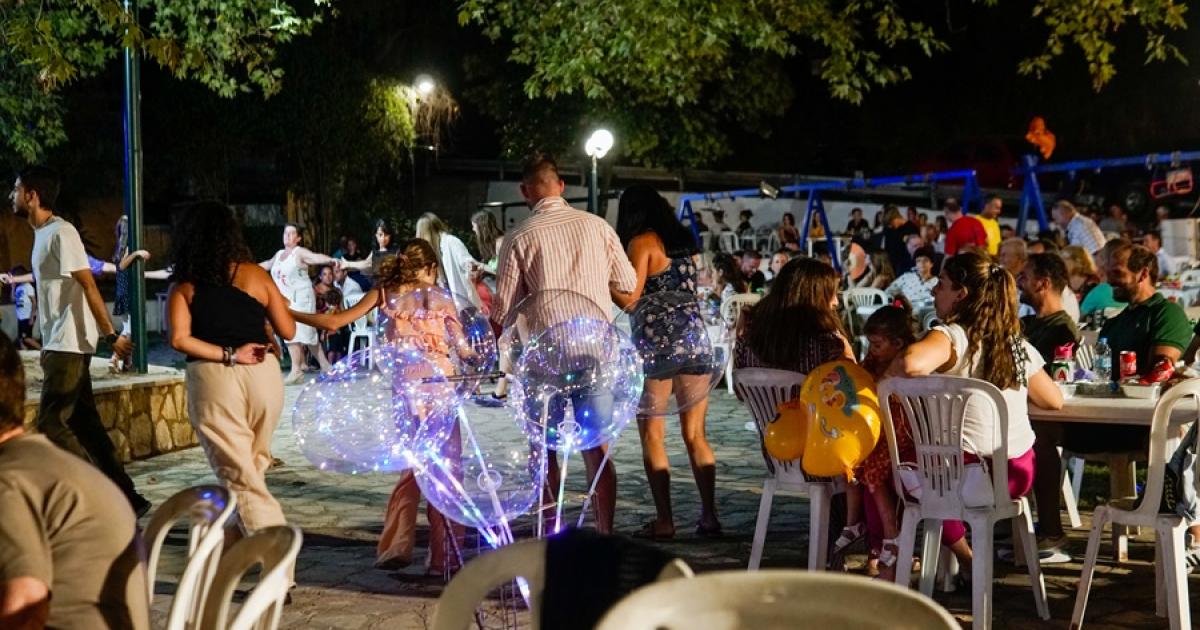
Agios Mamas is an emporopanigiri: a saint’s feast combined with one of Greece’s oldest and largest traditional trade fairs. For one week, the village fills with livestock traders, market stalls, street food, tavernas, carnival rides and thousands of visitors from across northern Greece, creating an atmosphere that’s equal parts pilgrimage, country fair and old-fashioned village festival. It’s lively, noisy and unmistakably Greek, offering a glimpse of a side of the country that feels refreshingly untouched by polished tourism. At its heart, though, the religious tradition remains. On 2 September, the feast day of Agios Mamas is marked with a liturgy and icon procession before the celebrations continue outside.
10. Panagia Kalamiotissa – Anafi (7 – 8 September)
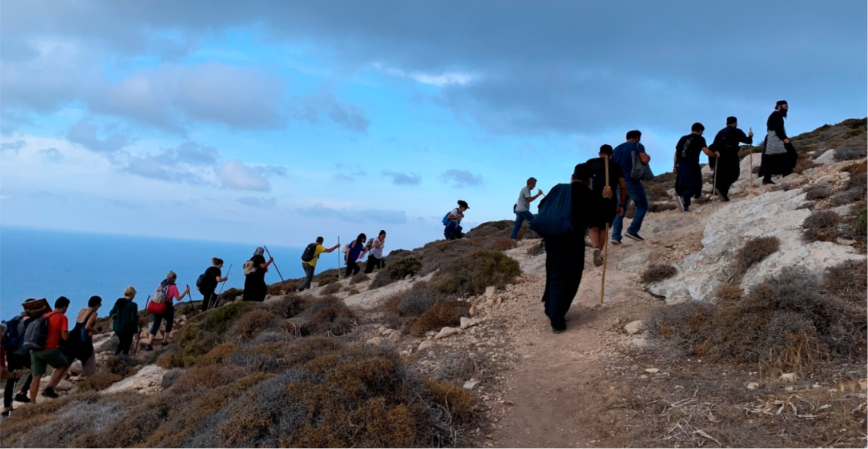
Tiny Anafi, one of the most remote inhabited islands in the Cyclades, feels like the edge of the Aegean. Its most important pilgrimage honors the Nativity of the Virgin Mary, when the icon of Panagia Kalamiotissa is carried from the lower Monastery of Zoodochos Pigi to a tiny chapel perched atop the towering Kalamos monolith, a sheer limestone rock rising 460 meters above the sea. Reaching it requires a steep hike of more than an hour, often in darkness, before the liturgy takes place at sunrise. Afterwards, the celebrations descend once more to the monastery and Chora, where the sound of the tsambouna and laouto accompanies circle dances that continue long into the night. It’s a fitting finale to this list: remote, demanding to reach, and unforgettable once you do.
Experiencing a Panigiri
While every panigiri is unique, they all share the same foundation: faith, hospitality and community. Whether you’re in a mountain village, a remote monastery or a tiny island chapel, there’s no better way to experience a tradition that continues to bring people together across Greece, year after year.
Thinking of timing your trip around a panigiri? Get in touch – we’d be delighted to help you plan the perfect Greek itinerary.