
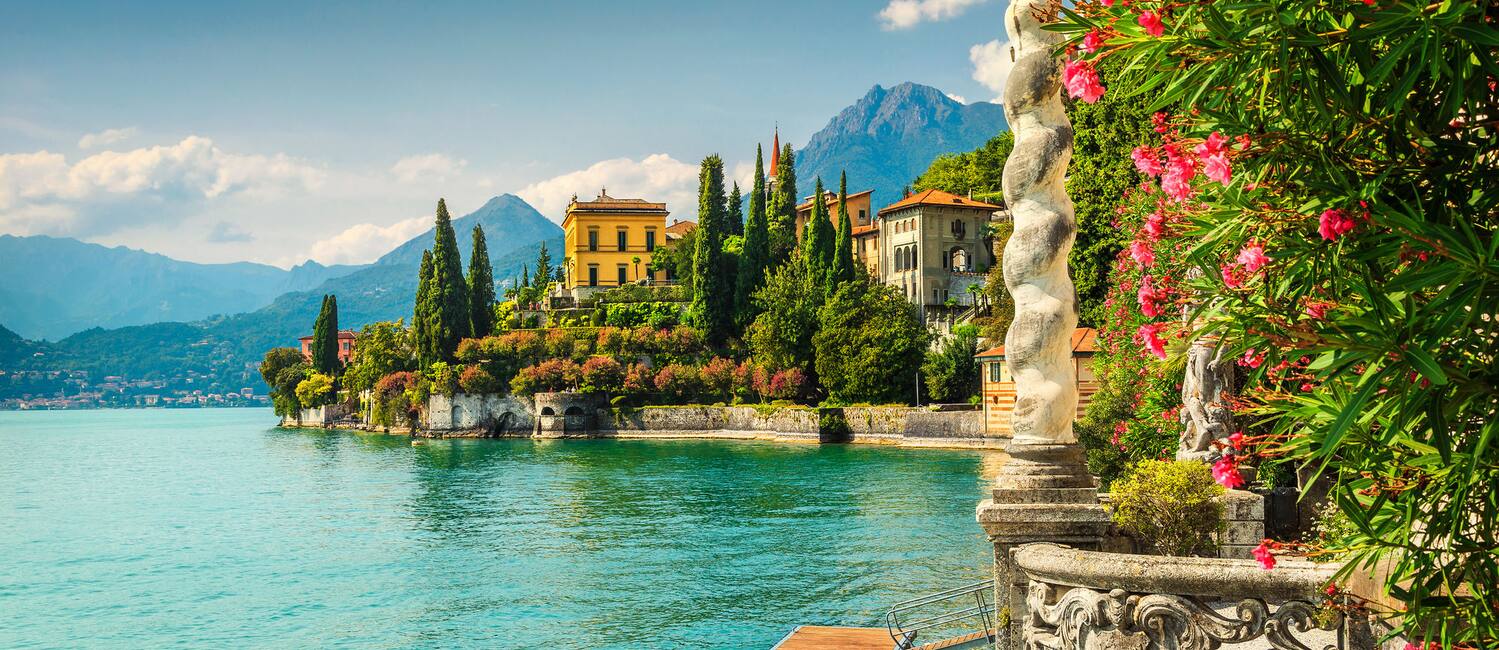
Most people assume all Italian lakes are interchangeable: beautiful water, mountains, villages, good food. But if you’re planning a trip to northern Italy and weighing up Como against Garda, you’re not choosing between similar options. You’re choosing between two entirely different experiences, and the difference matters more than most travel guides let on.
The geography
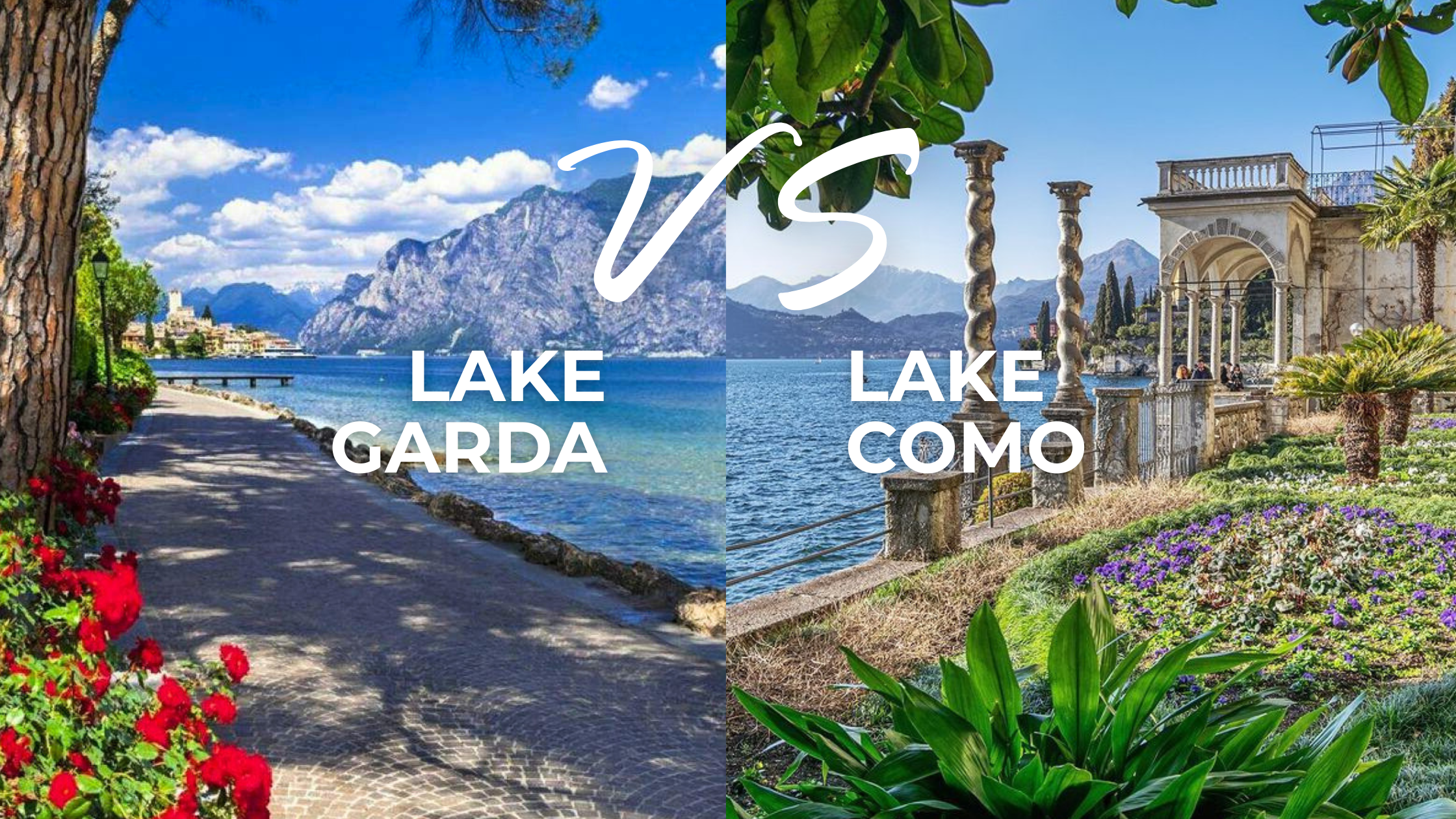
Lake Garda is the largest lake in Italy. It is broad, open, and relatively accessible. You can drive most of the way around it. The south of the lake is flat and warm, with sandy beaches and a relaxed Mediterranean feel. The north, on the other hand, narrows dramatically, with high rock walls dropping straight into deep water, and has a completely different character – almost Scandinavian. Despite those differences, the lake as a whole stays warmer than Como, particularly in the shallower southern basin. If you’re planning to spend serious time swimming, Garda wins.
Lake Como is something else entirely. It’s the deepest lake in Italy – over 400 metres in places – and shaped like an upside-down Y, its two branches forking south in different directions. That shape means you can’t simply circle it, and the lake remains narrow throughout, with steep mountain walls rising on either side. Driving from the northern tip to the southern end takes two hours in normal traffic. The far shore is always close but often unreachable without a significant detour. And even in peak summer, the water stays cold.
Main Towns
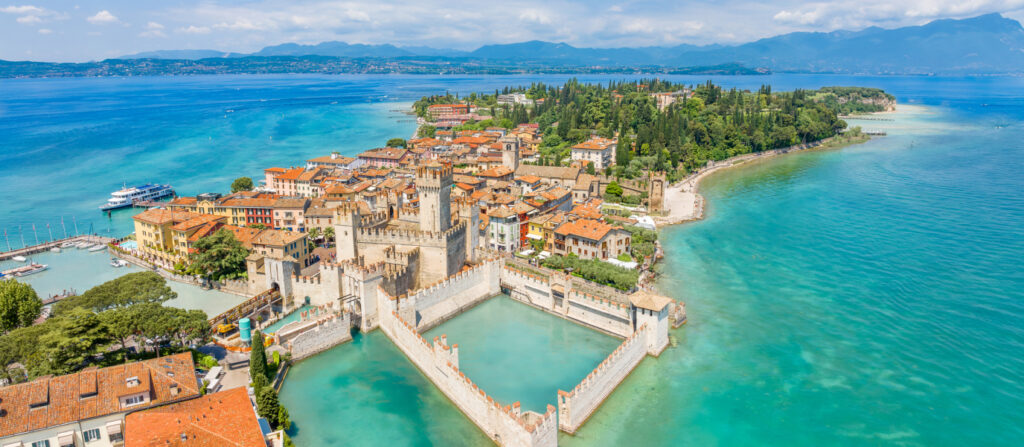
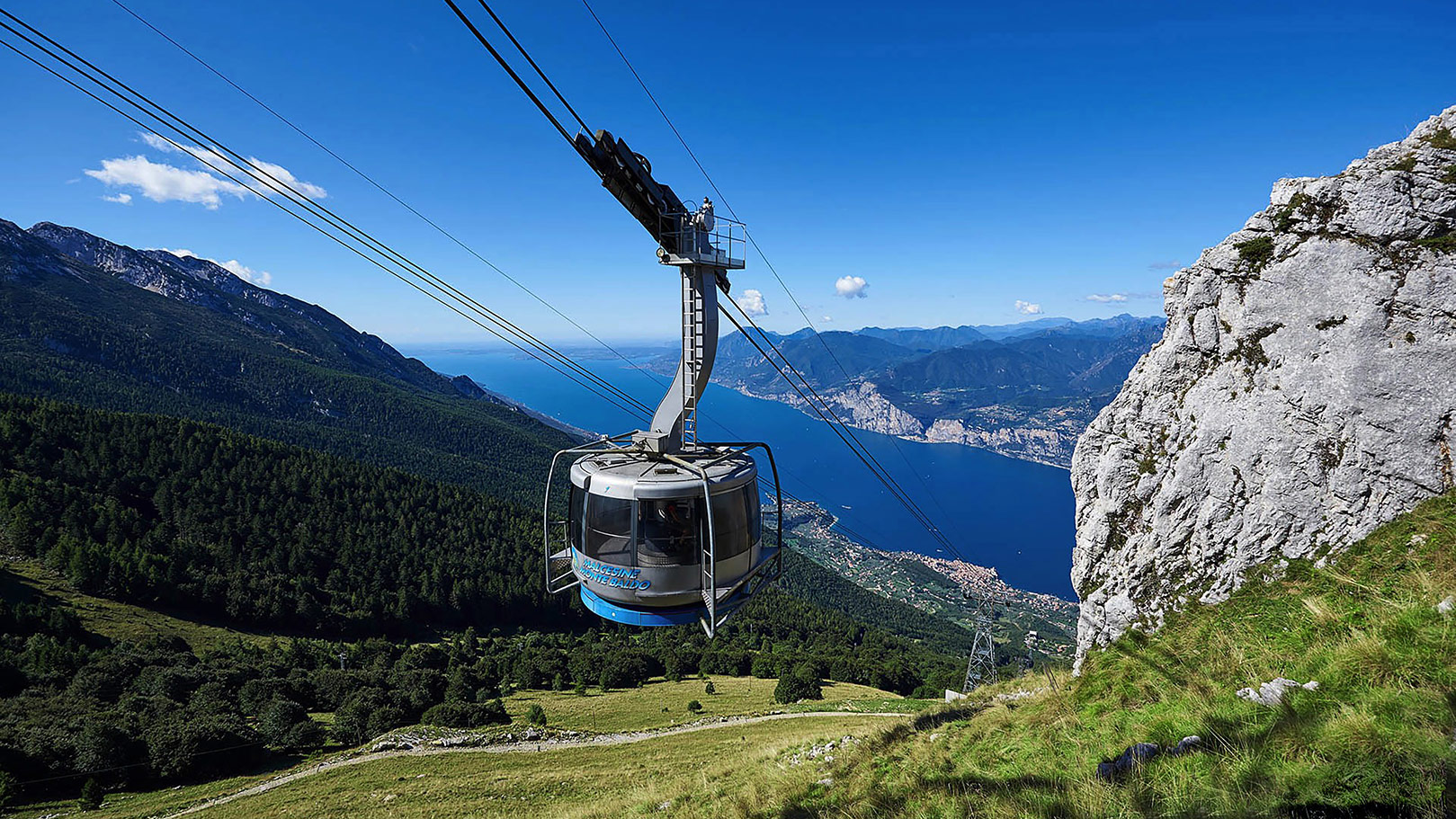
On Garda, the main towns are spread around the lake and feel quite different from each other. Sirmione sits at the southern end on a narrow peninsula, with a castle rising straight from the water and Roman ruins at the tip. Malcesine on the eastern shore is built around a small harbour with a medieval castle, and from here the cable car goes up Monte Baldo into the mountains. Riva del Garda, at the northern end, feels more Alpine, with a completely different atmosphere again. On Garda, you’re not moving between similar places: each part of the lake has its own character.
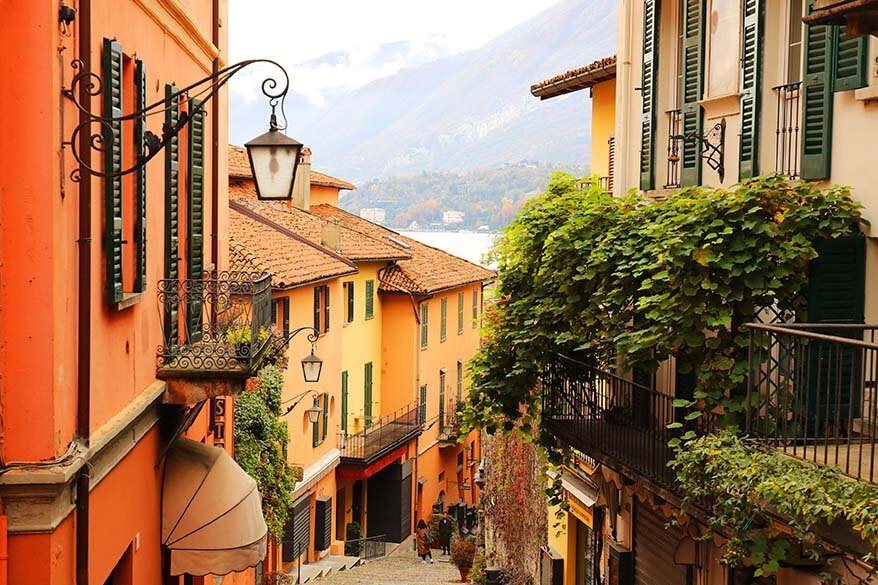
In contrast, the key towns on Como are more concentrated around the centre of the lake, where the two southern branches split. Bellagio sits at that junction, with steep cobbled streets and gardens that look out over both arms of the lake. Varenna, directly opposite, is smaller, with a narrow waterfront path along the water and steep lanes rising straight up the hillside, with the Castello di Vezio above. It is also on the direct train line from Milan, which makes it one of the easiest bases to reach. Menaggio, across on the western shore, has a longer, flatter promenade and easier access to the water. The towns are closer in feel and scale, with their differences coming more from their position on the lake than from completely different identities.
Key experiences
On Garda, the range of experiences is wider and more evenly distributed. The southern end gives you access to proper historical sites. It is not just a lake of pretty towns. There are Roman remains and larger, more developed areas with things to see beyond the waterfront. The eastern shore has vineyards and small towns where wine tasting is easy to organise. The western shore is quieter, with longer promenades and towns that feel more residential than tourist-focused. At the northern end, the landscape shifts completely. You have direct access to the mountains. You can take the cable car up Monte Baldo and spend a full day hiking at altitude. You can move between these without leaving the lake, which is what makes Garda feel varied rather than repetitive.
On Como, the focus is narrower and more tied to the lake itself. The main points of interest are along the shoreline. There are historic villas with formal gardens, small-scale towns, and specific viewpoints rather than large sites. Villa del Balbianello, set on a wooded point and reached by boat or a long walk, is one of the most distinctive sites on the lake and has been used as a filming location for both Star Wars and a Bond film. There are walking routes along the lake, such as the Sentiero del Viandante, but these are lower and more limited. They follow the shoreline rather than taking you into the mountains. There is very little in the way of major historical landmarks comparable to what you find on Garda, and less built infrastructure for mountain access directly from the lake. The distinction comes from individual places rather than categories. You are not building a trip around a wide range of activities, but around a smaller number of places that are worth spending time in.
Crowds and timing
On Garda, the size of the lake helps spread people out. The main towns are further apart, and you have more choice in where to base yourself. Sirmione, at the southern end, is the busiest point and can feel crowded in summer, but it is easy to stay elsewhere and avoid it. The western shore and the northern end are generally quieter, even in peak season.
On Como, the crowds are more concentrated. The main towns sit close together around the centre of the lake, and most visitors move between the same few places. Bellagio and Varenna get particularly busy in July and August. Because the lake is narrower, there is less space to disperse, and you feel that more. The difference between seasons is also more noticeable. June and September are significantly easier than peak summer.
Lake Garda vs Lake Como: Which One Makes Sense for You
The truth is it depends on your priorities and how you want to spend your time.
If you want to see different places within the same trip, Garda makes that easier. You can drive most of the lake, and the towns are far enough apart to feel distinct but close enough to reach without much planning. You can base yourself in one place and still visit several others in a day. If you prefer to stay within a smaller area and experience it more fully, Como works better. The lake is divided into branches, and moving between them takes time, so you naturally spend longer in each place. That makes it easier to settle into one base and get to know it properly rather than constantly moving on.
If swimming is important, Garda is the stronger option. The southern end is shallower, the water warms up more, and there are beaches and easy access points. If swimming is not a priority, Como is not a disadvantage. The lake is not used in the same way. The focus is on the setting around it: the towns, the villas, and the views from the shoreline. Most of the experience happens alongside the water rather than in it.
If you want to combine the lake with the mountains in a direct and practical way, Garda makes that straightforward. From the lake itself, you can go up Monte Baldo and spend a full day at altitude. If you want the mountains to be part of the setting rather than something you actively go into, Como does that better. The lake stays narrow and enclosed, and the mountains are always close, forming a continuous backdrop rather than a separate destination.
If you want flexibility and the ability to change plans easily, Garda is the easier choice. The road access and layout give you more control over how you move. If you are comfortable committing to one area and letting the structure of the lake shape your trip, Como works better. The reliance on boats and the layout of the lake create a more fixed experience, which suits a slower, more focused way of travelling.
There is no better lake. Both are excellent, but they are built for different types of trips.
If you are unsure which one fits what you have in mind, we can help you plan it properly.
Contact us at The Overseas Club to plan your Italian lake trip.