
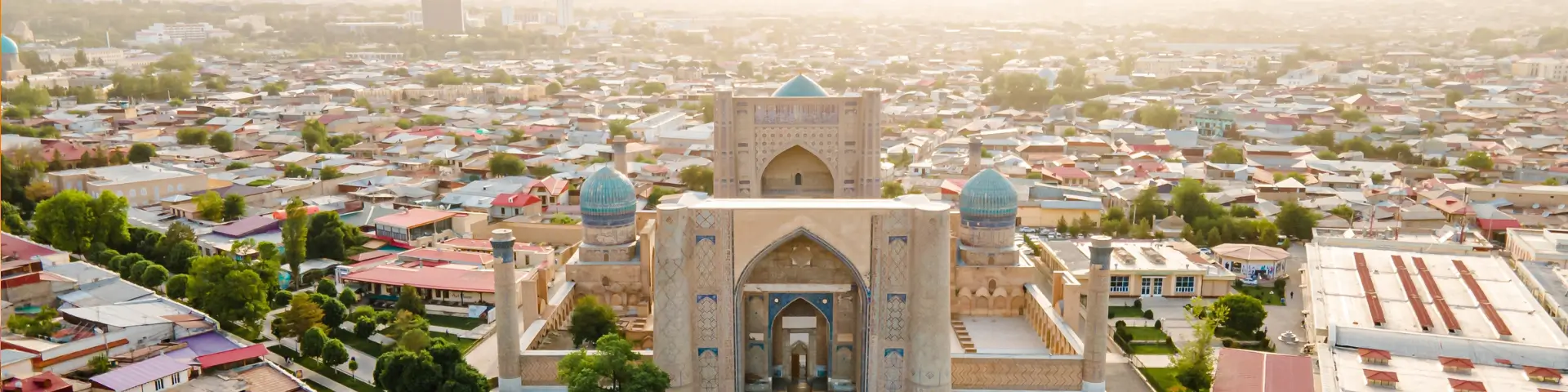
September is an odd month for travel. Summer’s winding down, but it’s too early to think about winter yet, and you’re stuck in a gap with nowhere obvious to go. Uzbekistan solves that problem well. The intense heat of the Central Asian summer has eased, September and October bring properly comfortable temperatures, and it’s one of the best windows all year to see the country’s Silk Road cities.
For a first trip, we’d allow around 10 days and follow the classic route through Tashkent, Samarkand, Bukhara and Khiva. Three of the four are connected by train, the distances are manageable, and each stop is different enough to justify moving on every couple of nights.
1. Tashkent (1-2 nights)
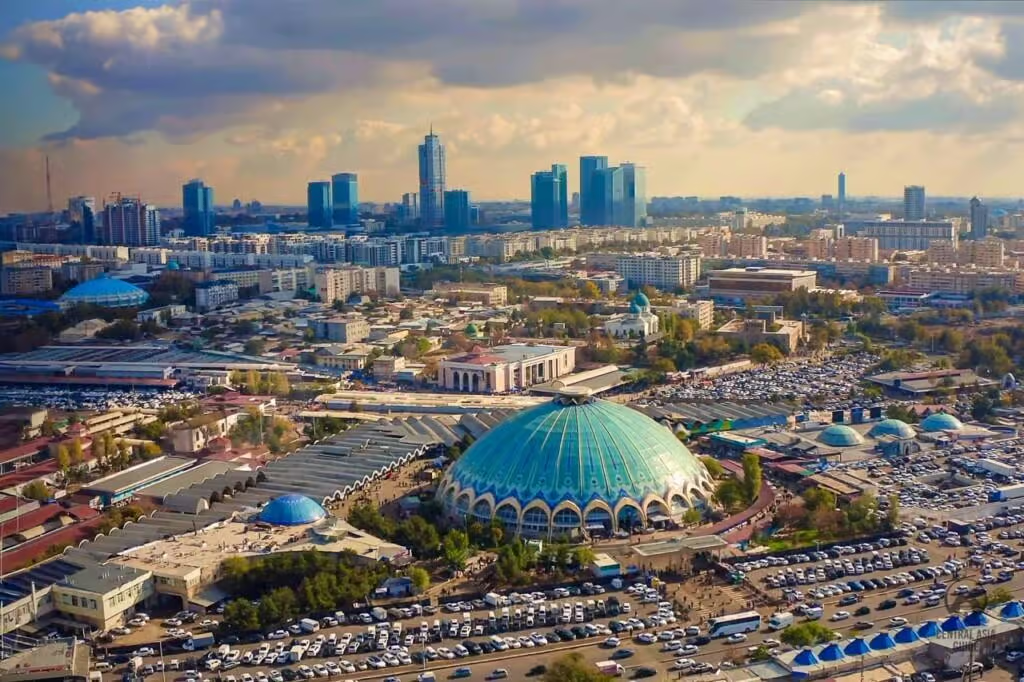
Tashkent is Uzbekistan’s capital and the usual starting point, since it’s where most international flights land. It’s also the least “Silk Road” of the four cities – much of it was rebuilt in the Soviet era after a major earthquake in 1966, so you get wide avenues and modern buildings rather than the old-town feel you’ll find everywhere else on this trip. Think of it as the warm-up: a night or two here before the historic cities properly begin.
Highlights include Chorsu Bazaar, a huge blue-domed market that’s been the city’s main trading hub for centuries; the metro, where many stations were individually decorated during the Soviet era with marble, mosaics and elaborate lighting, more like small museums than transport stops; and the Hazrati Imam complex, home to several mosques, madrasas and a library holding some of the oldest Islamic manuscripts in the world.
Where we’d stay
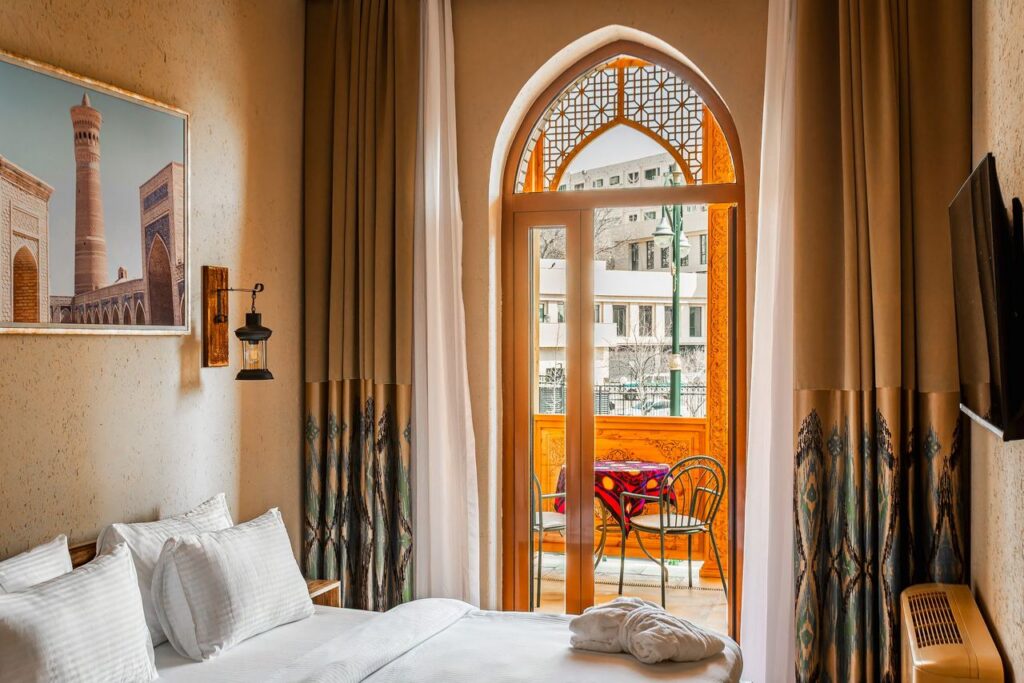
Farovon Tashkent is a new boutique hotel tucked into the historic part of the city, five minutes on foot from Hazrati Imam. It opened this year, and it shows – the rooms lean hard into Uzbek craft, all carved wood, ceramics and suzani textiles, so it feels like a proper introduction to the country rather than a generic layover hotel.
2. Samarkand (2-3 nights)
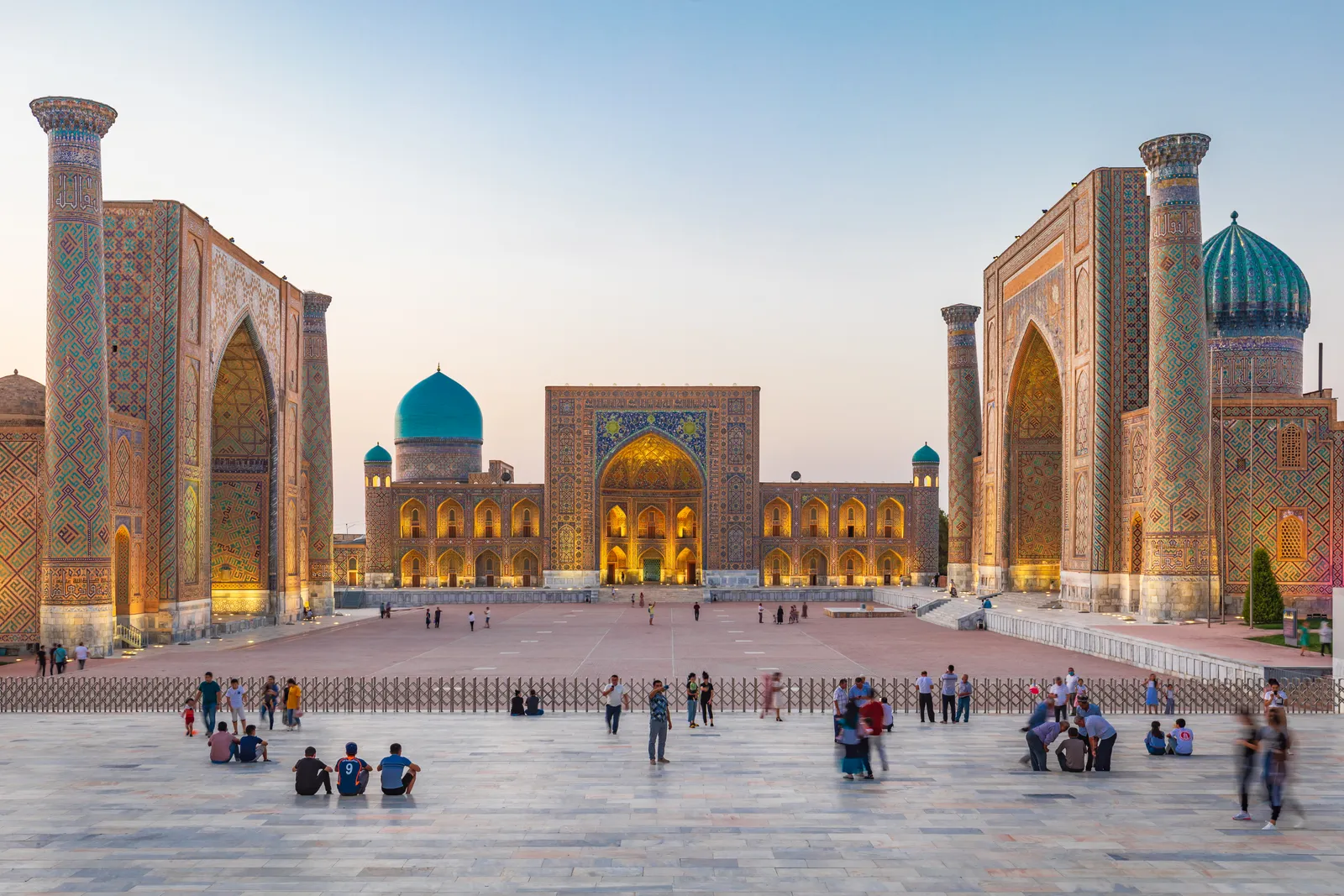
From Tashkent, the high-speed train gets you to Samarkand in around two hours. This is the Uzbekistan you’ve probably already seen in photographs: enormous madrasas, blue domes and some fairly extraordinary tilework.
Registan Square is the headline sight, with three madrasas surrounding the square, but don’t stop there. Shah-i-Zinda is a narrow avenue of intricately decorated mausoleums, while Gur-e-Amir is the final resting place of Timur, whose empire transformed Samarkand in the 14th century. Bibi-Khanym Mosque and nearby Siyob Bazaar are easy to combine on the same day.
Two nights here works if you’re keeping the trip moving; three gives you more time without having to race between the main sights.
Where we’d stay
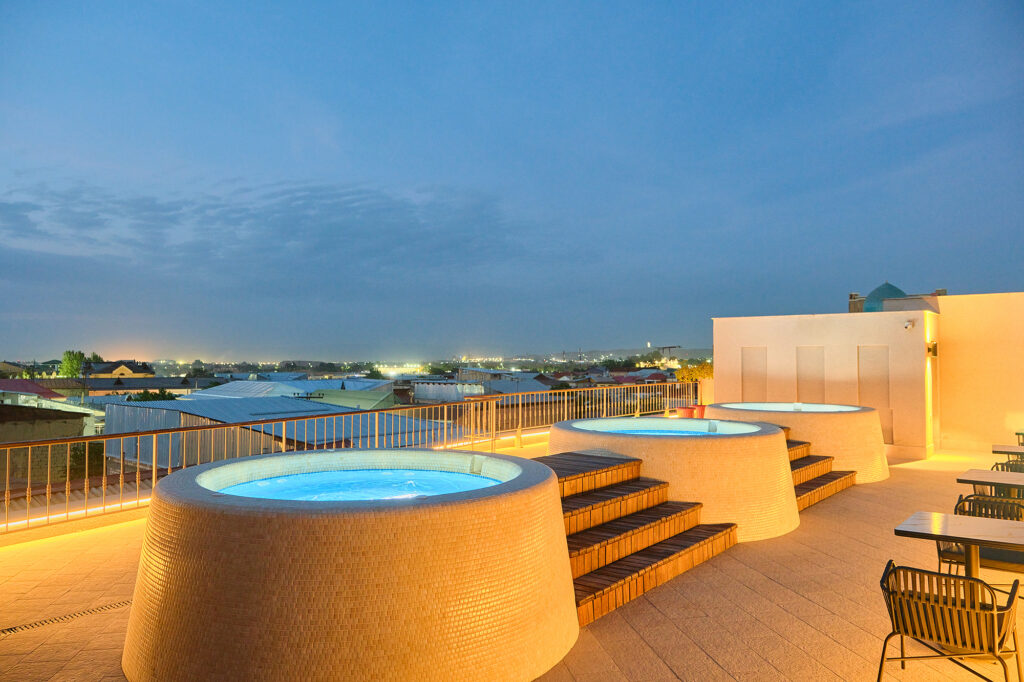
Kosh Havuz Boutique Hotel sits in Samarkand’s old city, close enough to Registan Square to walk there in minutes. Carved wood and tilework run through the whole building, but the real reason to stay is the roof – three private Jacuzzis looking straight out over the domes of the old town.
3. Bukhara (2-3 nights)
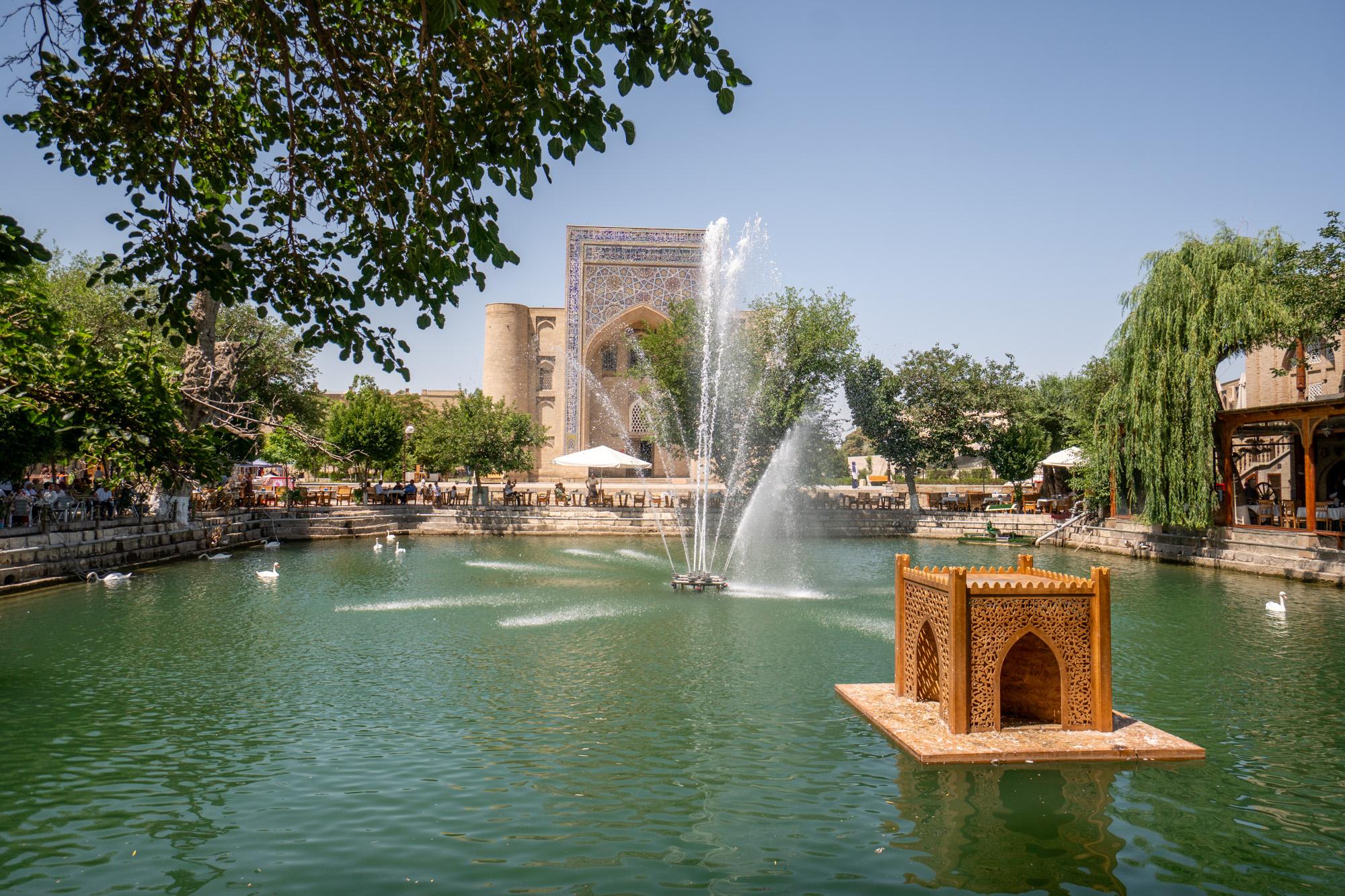
Bukhara is another easy train journey from Samarkand, but it feels quite different when you arrive. Rather than moving between a handful of huge monuments, much of the appeal here is simply having the historic centre around you: old trading domes, madrasas, mosques and narrow streets are all packed into a relatively small area.
The Po-i-Kalyan complex is the obvious landmark, dominated by the 12th-century Kalyan Minaret. From there, continue through the trading domes towards the Ark Fortress, then end up at Lyabi-Hauz, the old square built around a pool that is still one of the main gathering places in the city.
Give Bukhara at least two nights. If you have an extra night anywhere on this itinerary, this would be a good place to use it.
Where we’d stay
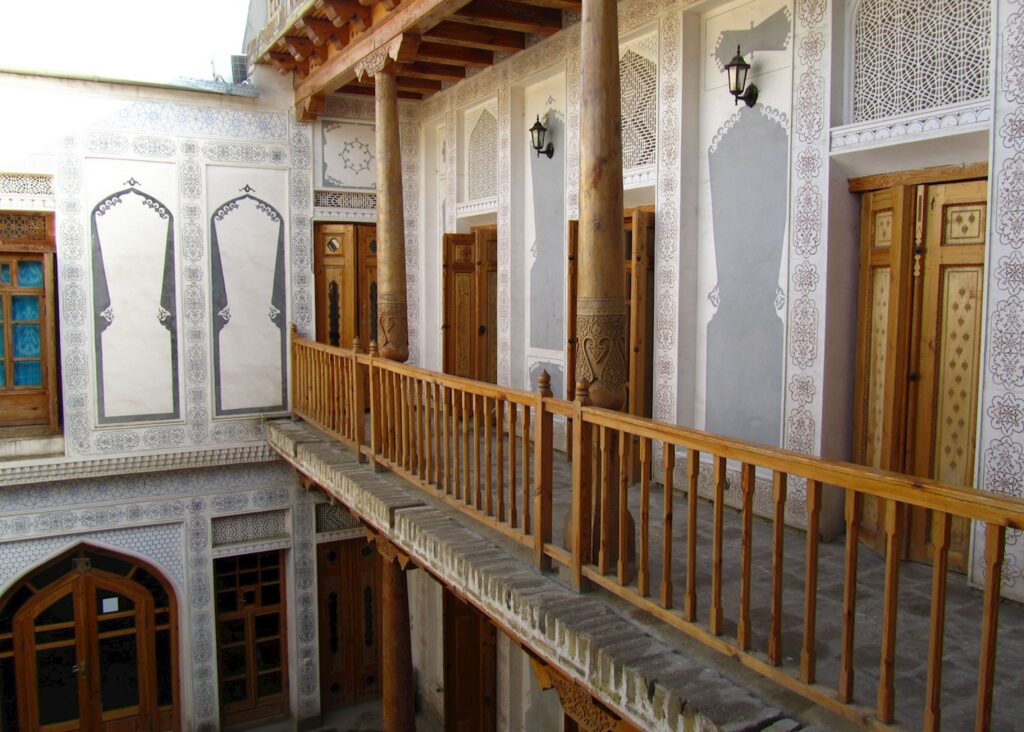
Komil Bukhara Boutique Hotel occupies a 19th-century merchant’s house two minutes from Lyabi-Hauz. Most of the original decoration has survived (painted walls, carved wood, traditional textiles) so a night here feels less like a hotel stay and more like being let into someone’s old family home.
4. Khiva (2 nights)
Khiva requires the longest journey of the trip, around 450 kilometres west of Bukhara, but we’d still include it on a 10-day itinerary.
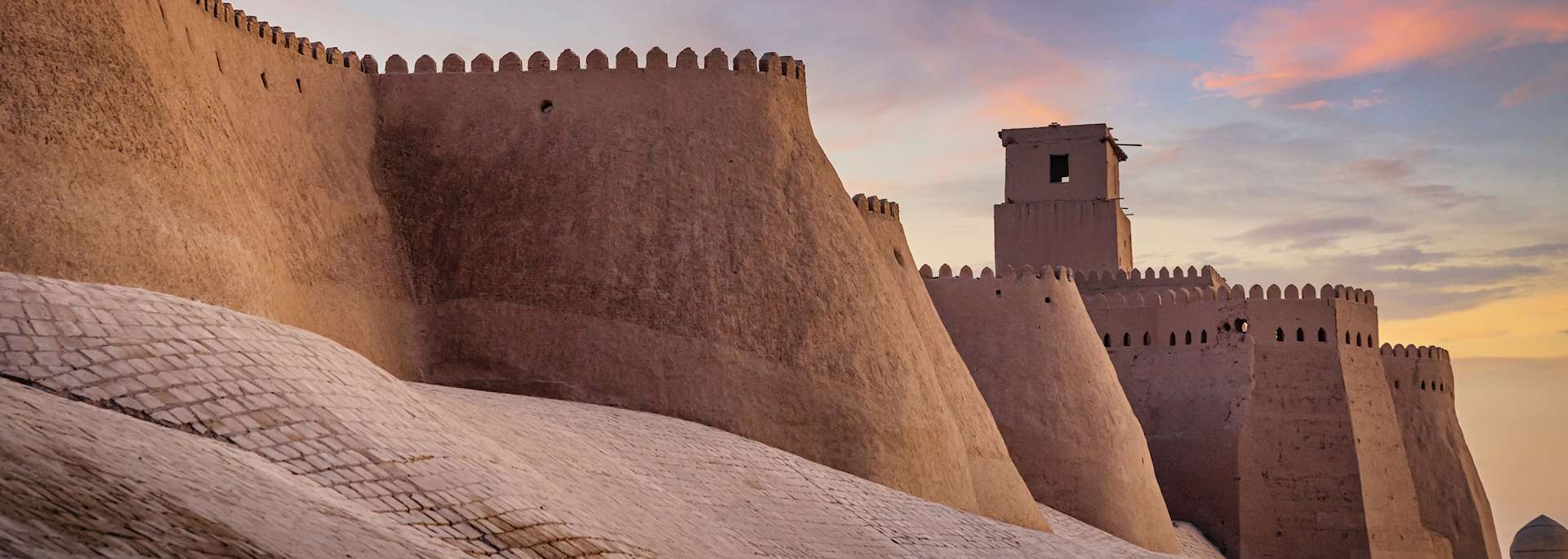
Almost everything you’ll come for sits within Itchan Kala, the walled inner city. It’s compact enough to explore on foot, with the unfinished turquoise Kalta Minor, Kunya Ark citadel, Tash Khauli Palace and Juma Mosque all within the walls. Because the historic centre is so small, you can also wander without much of a plan, which is part of the appeal after several days of sightseeing.
Two nights gives you a full day here and, importantly, an evening after many of the day visitors have left.
Where we’d stay
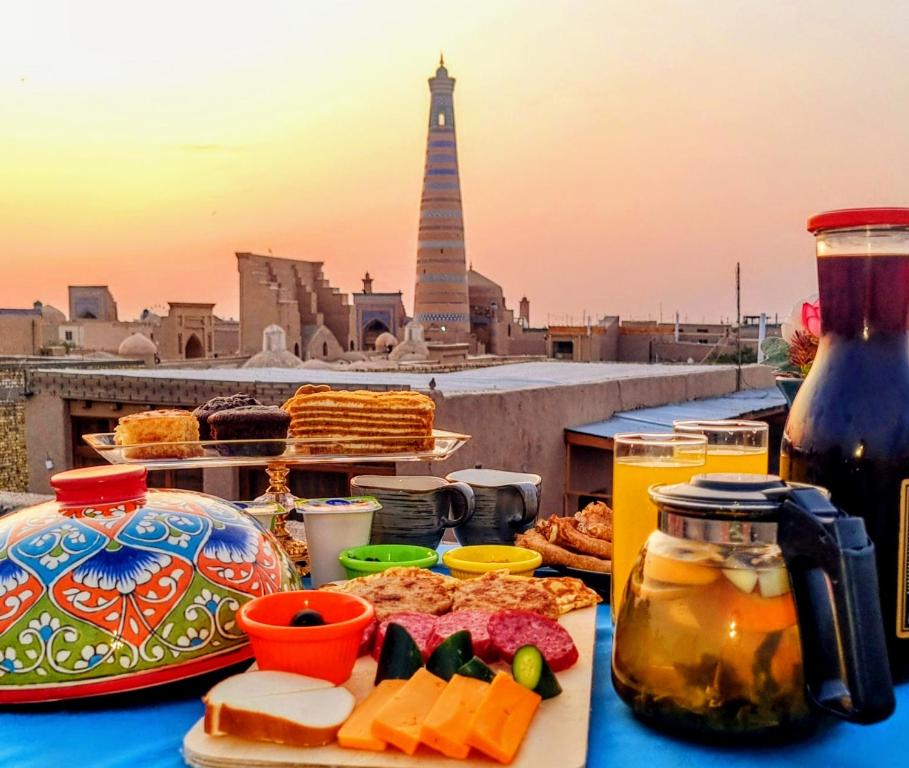
Oasis al-Khiva is a small boutique hotel built right into the walls of Itchan Kala, close to Kalta Minor. Its rooftop terrace looks out across the old city, and it’s the kind of place where you end up staying up there far longer than planned, especially around sunset.
Getting around
One of the nice surprises about planning an Uzbekistan trip is how straightforward the main route is. The Afrosiyob high-speed trains connect Tashkent, Samarkand and Bukhara, so you can cover most of the itinerary by rail rather than arranging drivers or internal flights. Khiva is the exception: it’s considerably farther west, so you’ll need to allow more time for that journey.
Entry is also straightforward for most travellers: UK, US, EU, Canadian and Australian passport holders can currently enter Uzbekistan visa-free for stays of up to 30 days.
If this has you thinking about a trip, get in touch and we’ll help you plan the route, the trains, and where to stay in each city.